


Blog
EMS AIRFLOW vs Scale and Polish and Choosing the Right Clean

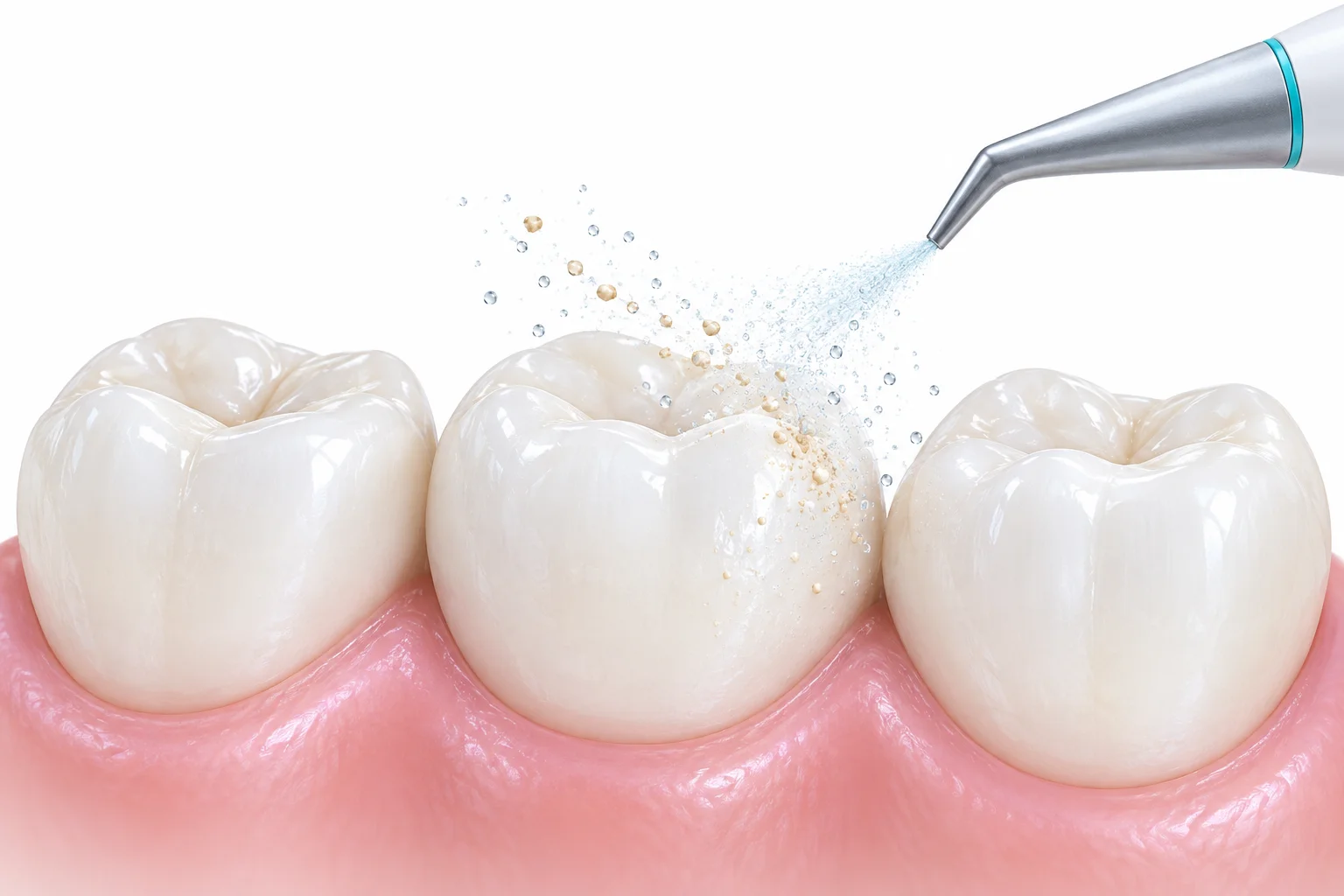
Comparing EMS AIRFLOW vs scale and polish can leave you wondering whether you should switch from your usual dental clean. Is it a different treatment, an extra step, or simply another name for getting your teeth cleaned?
The short answer is that these methods can work together. AIRFLOW targets biofilm and surface staining, while scaling addresses harder deposits. At Family Dental Care, the useful conversation is about what your teeth and gums need, rather than choosing a treatment solely because it sounds newer.
Understand what is being removed
Plaque is a bacterial film that develops on teeth. When it hardens into tartar, it becomes a deposit that everyday brushing cannot remove. External staining is different again: it may change the appearance of teeth without telling you how healthy the gums are.
The American Dental Association's explanation of plaque describes how plaque contributes to tooth decay and gum disease. Understanding that distinction helps make sense of the tools used during a clean. You may need attention to more than one type of build-up in the same appointment.
What happens during a scale and polish
Scaling uses suitable instruments to remove hard deposits. Depending on your mouth, this may involve ultrasonic equipment, hand instruments or both. Polishing is a separate step that may help remove remaining surface staining when appropriate.
The NHS overview of dental treatments includes scale and polish as professional cleaning. The phrase describes an approach, not one fixed experience. A small amount of build-up and a mouth needing more extensive care will not necessarily be treated in the same way or take the same time.
Where EMS AIRFLOW fits in
AIRFLOW uses air, water and a selected powder to remove biofilm and certain external stains. It can be part of Guided Biofilm Therapy, a broader approach that includes assessment, making biofilm visible, cleaning and reviewing the result.
EMS information on the Guided Biofilm Therapy protocol describes care that is adapted to the patient. AIRFLOW does not automatically eliminate the need for scaling. If hard deposits remain, additional instruments may still be needed.
Ask your Family Dental Care branch whether the equipment is available and how it would fit into your appointment.
EMS AIRFLOW vs scale and polish: which is right for your mouth?
Begin with the examination findings. Ask whether the main concern is staining, tartar, bleeding gums or something else. If your dentist recommends several steps, ask what each contributes rather than treating them as duplicate services.
Patients with implants, braces or extensive restorative work should mention these when booking. The cleaning method, powder and instruments need to suit the surfaces involved. A treatment that is appropriate around natural teeth is not automatically the correct choice everywhere in the mouth.
You can also explain what made previous appointments difficult. Was it cold water, a particular sensitive area, the noise or keeping your mouth open? Specific details help the clinician plan adjustments more effectively than simply saying you dislike dental cleaning.
Know when you need more than a routine clean
Bleeding gums, persistent bad breath or concerns about loose teeth deserve assessment. If gum disease is present, your dentist may recommend a treatment plan beyond routine stain removal.
ADA guidance on scaling and root planing explains treatment for deposits associated with periodontal pockets. That is not interchangeable with a cosmetic polish. Ask what the diagnosis means, whether further appointments are needed and how progress will be checked.
The cleanest-looking teeth are not necessarily evidence that an underlying gum problem has been managed. Make sure you understand the health goal of the appointment as well as the visible result.
Compare appointments rather than marketing labels
Before confirming a booking, ask what the quoted fee includes. Does it cover an examination, cleaning, any recommended imaging or a separate review? If you use medical aid, ask the practice to explain the proposed codes and check your benefits with your scheme.
Keep the questions practical. Ask how long to allow, whether your concerns require a dentist first and what additional care could change the estimate. You should understand the proposed plan before deciding to proceed.
What you do afterwards still matters
A professional clean gives you a starting point, not protection from future build-up. Ask the clinician to show you one area where your daily technique could improve. That might mean positioning an interdental brush differently or learning how to clean around a fixed retainer.
Your next appointment should reflect your individual needs. The NHS advice on dental check-ups notes that recall intervals vary with oral health and risk. Check whether the recommended interval is for an examination, a clean or periodontal maintenance.
Frequently Asked Questions
Is AIRFLOW better than scaling?
Not as a universal rule. They address different deposits and may be used together. Ask which findings support the recommendation in your mouth rather than comparing the methods without an assessment.
Will AIRFLOW make my teeth whiter?
Removing external stains may improve their appearance, but air polishing is not bleaching. If you want a lighter underlying shade, discuss whitening separately after any necessary oral health care.
Can I request only AIRFLOW?
You can discuss your preference, but the clinician should explain if other cleaning steps are required. Leaving hard deposits untreated simply to avoid instruments may not address the problem identified.
How do I book the right appointment?
Contact your Family Dental Care practice and describe your symptoms, dental work and interest in EMS AIRFLOW. Confirm local availability and let the team help you arrange the appropriate assessment.